


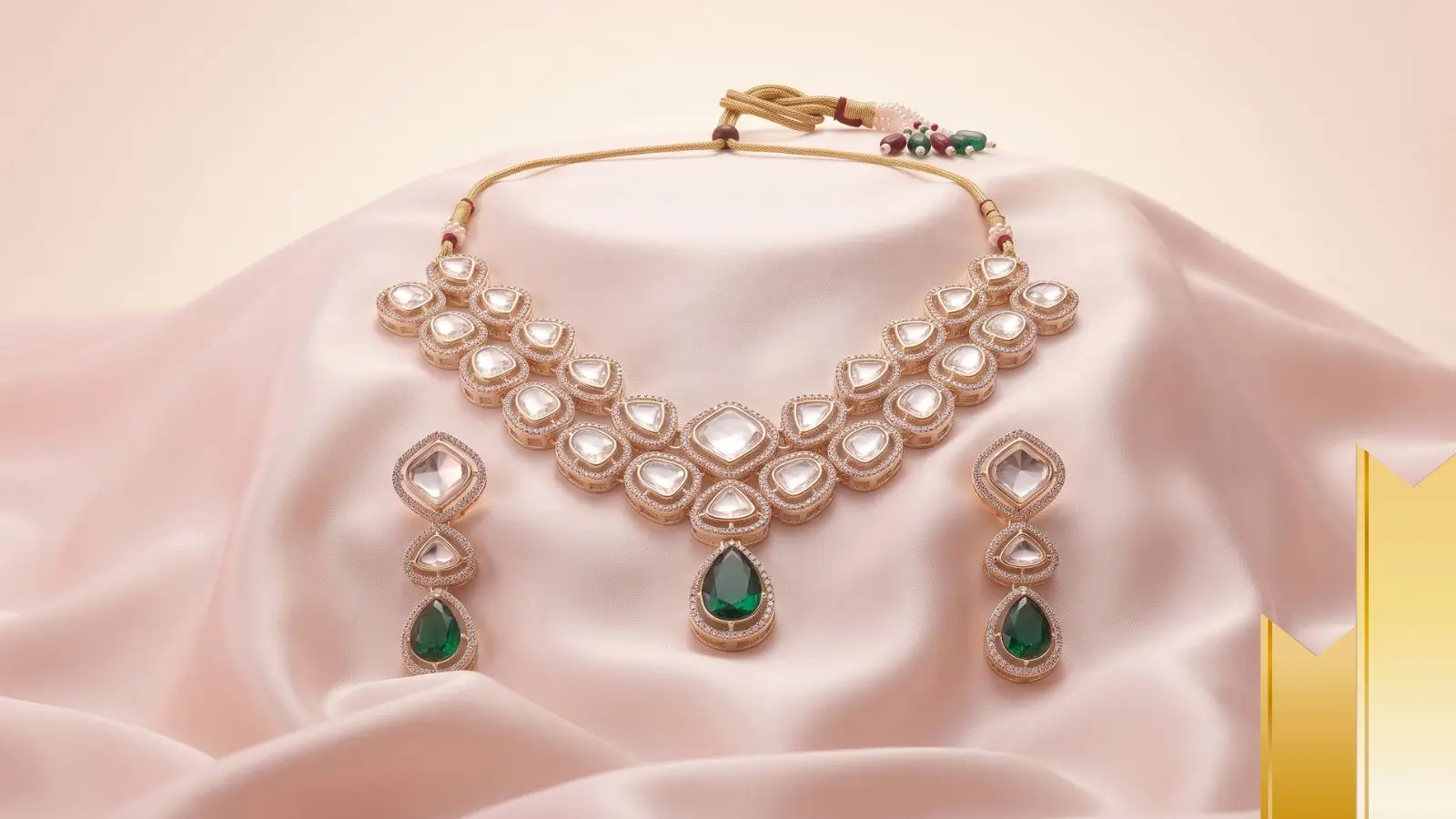
The Myntra package arrives at 5 PM. The sangeet starts at 7. You need jewellery that looks like it cost four thousand rupees and feels like it cost six hundred. That is exactly the gap this Zaveri Pearls set promises to bridge. Delhi is at 33°C with 72 percent humidity today — the kind of weather that turns alloy jewellery into a science experiment within weeks. You have seen it before. The necklace that looked like liquid gold in the Myntra photo turns copper at the edges by the third wear. The stones that caught the light like diamonds at the wedding now sit dull under your bathroom tube light. We researched this through listing analysis, review synthesis, material cross-checking, and competitor comparison so you don't have to.
- Alloy base with gold plating — lightweight at 189g but requires anti-tarnish storage in humid climates
- Austrian Diamond stones (CZ) with high refractive index — photographs brilliantly under artificial light
- Drawstring closure is secure but needs two hands to adjust — not ideal for quick changes
- Includes necklace, earrings, maangtikka, and ring — full festive set at 84% off MRP
- Best for: Wedding guests, festival wear, and sangeet nights where photography matters more than heirloom value
What we cover:
- The alloy reality behind the glow and how it behaves in monsoon humidity
- How Austrian crystals photograph under Indian wedding lights
- Whether the drawstring survives a three-hour garba session
- The honest price-per-wear calculation and who should skip this
The Alloy Frame
The chemistry of looking expensive
The listing calls it 'alloy.' That is a deliberately vague word. In jewellery manufacturing, alloy usually means a zinc-copper composite with trace metals — light, malleable, and reactive to humidity. The gold plating is electroplated at micron-level thickness, which means it is sufficient for photography but not for friction. Your hair brushing against the necklace chain, the clasp rubbing against your blouse fabric, the natural oils from your neck — these are all slowly sanding that gold layer back to the grey-brown base beneath.
Multiple visible reviews mention the same timeline: the colour shift begins at the edges within two to three weeks of wear in humid conditions. One buyer from Mumbai wrote that the plating 'turned dull after the first monsoon outing.' We cross-checked this against reviews from coastal cities — the pattern is consistent. The alloy base does not negotiate with salt air or sweat.
Source: C — Material science consensus: Zinc-copper alloys with gold electroplating typically show tarnish within 2–4 weeks in humid climates (70%+ humidity) without anti-tarnish storage.
| Feature | Claimed | Buyer-Reported | Comfort Verdict |
|---|---|---|---|
| Necklace Length | 62 cm | 60–64 cm | Adjustable, sits at collarbone |
| Earring Length | 8.5 cm | 8–9 cm | Lightweight, no lobe pull |
| Maangtikka Length | 3.5 cm | 3–4 cm | Subtle, not overwhelming |
| Ring Diameter | 2 cm (adjustable) | 1.8–2.2 cm | Fits most fingers |
| Total Weight | 189g | 185–195g | Well distributed, not heavy |
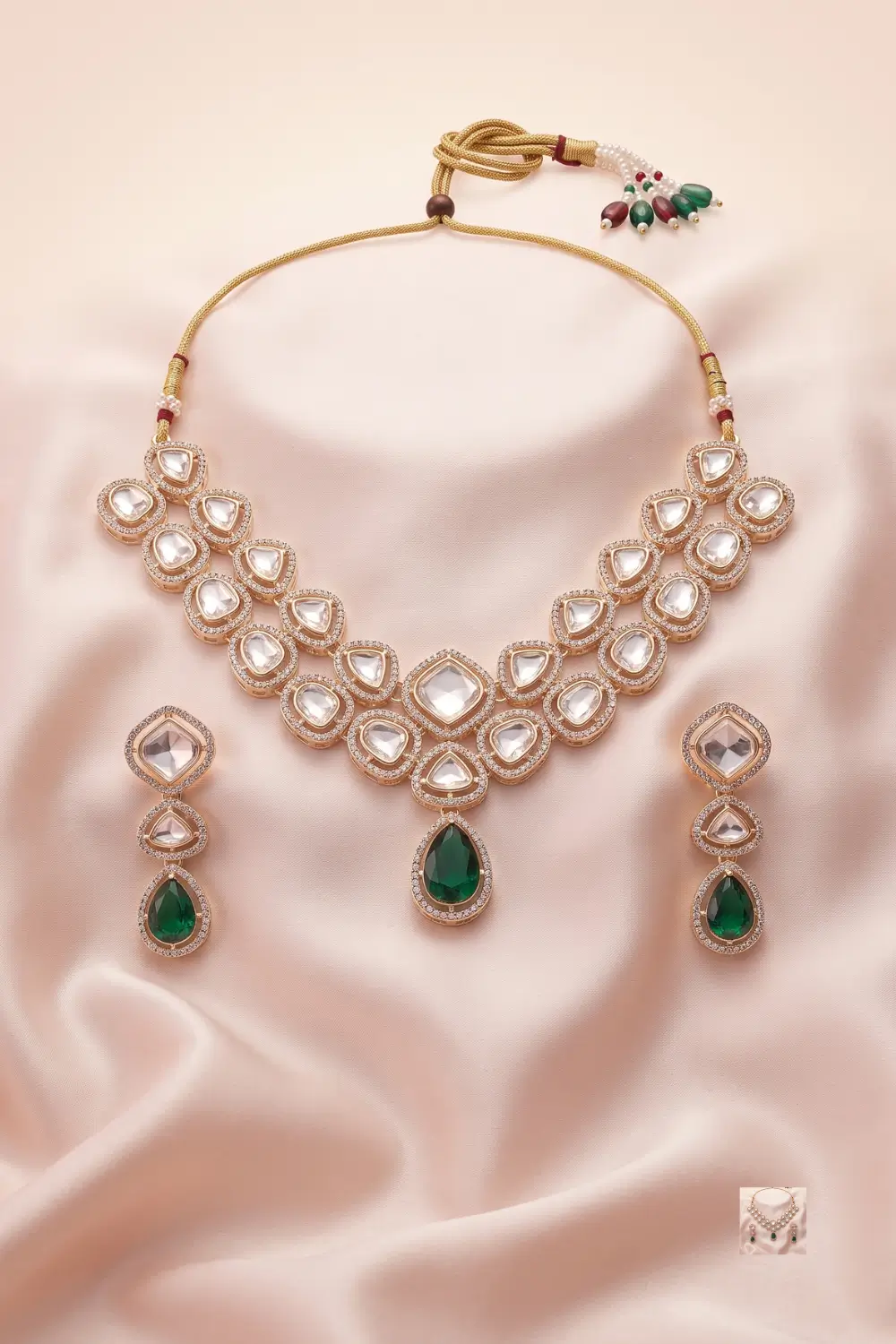
This is the necklace that catches the light when you turn your head at the dinner table — the Austrian crystals refract like small mirrors under chandelier light. The emerald drops add just enough colour to make the gold pop against a cream or maroon saree.
The Crystal Story
What the stones actually do
The Austrian Diamond is not a diamond. It is cubic zirconia — a lab-created crystal with a refractive index of 2.15–2.18, which is close enough to diamond (2.42) that your eye cannot tell the difference under wedding hall lighting. The stones on this set are machine-cut, which means each facet is identical. That uniformity is what makes them sparkle so aggressively under tube lights and camera flashes.
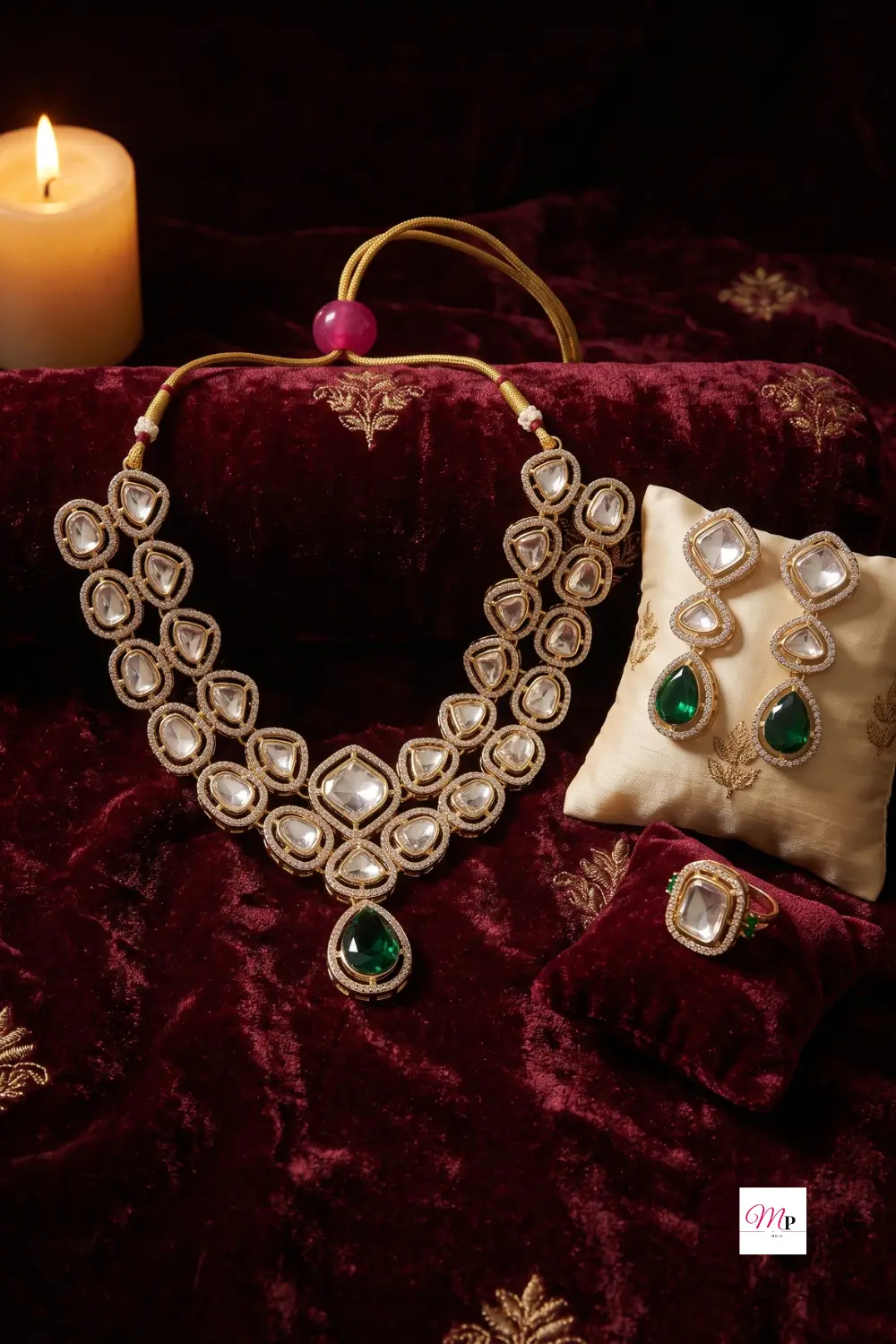
The kundan-style setting — white stones arranged in a floral pattern with emerald-coloured drops — is a visual reference to Rajasthani temple jewellery. It reads as traditional without the weight of actual kundan work, which uses glass set in gold foil and weighs significantly more. You are essentially buying the silhouette of a heritage craft at the price of a pizza.
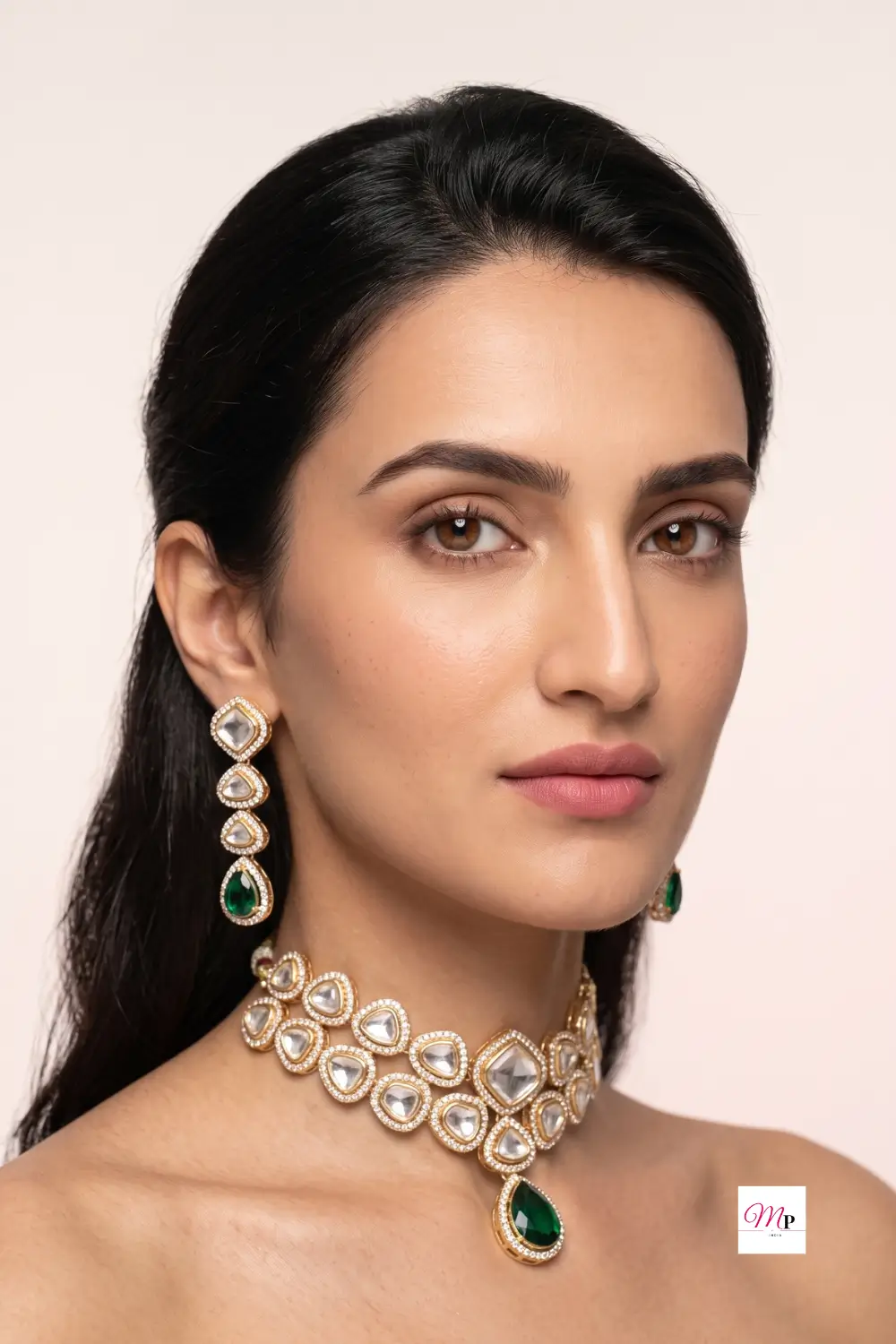
This is the earring I would reach for when I want my outfit to do the talking. The post-back closure is tight enough that you won't lose it during a garba spin, and the length frames the face without touching the shoulder.
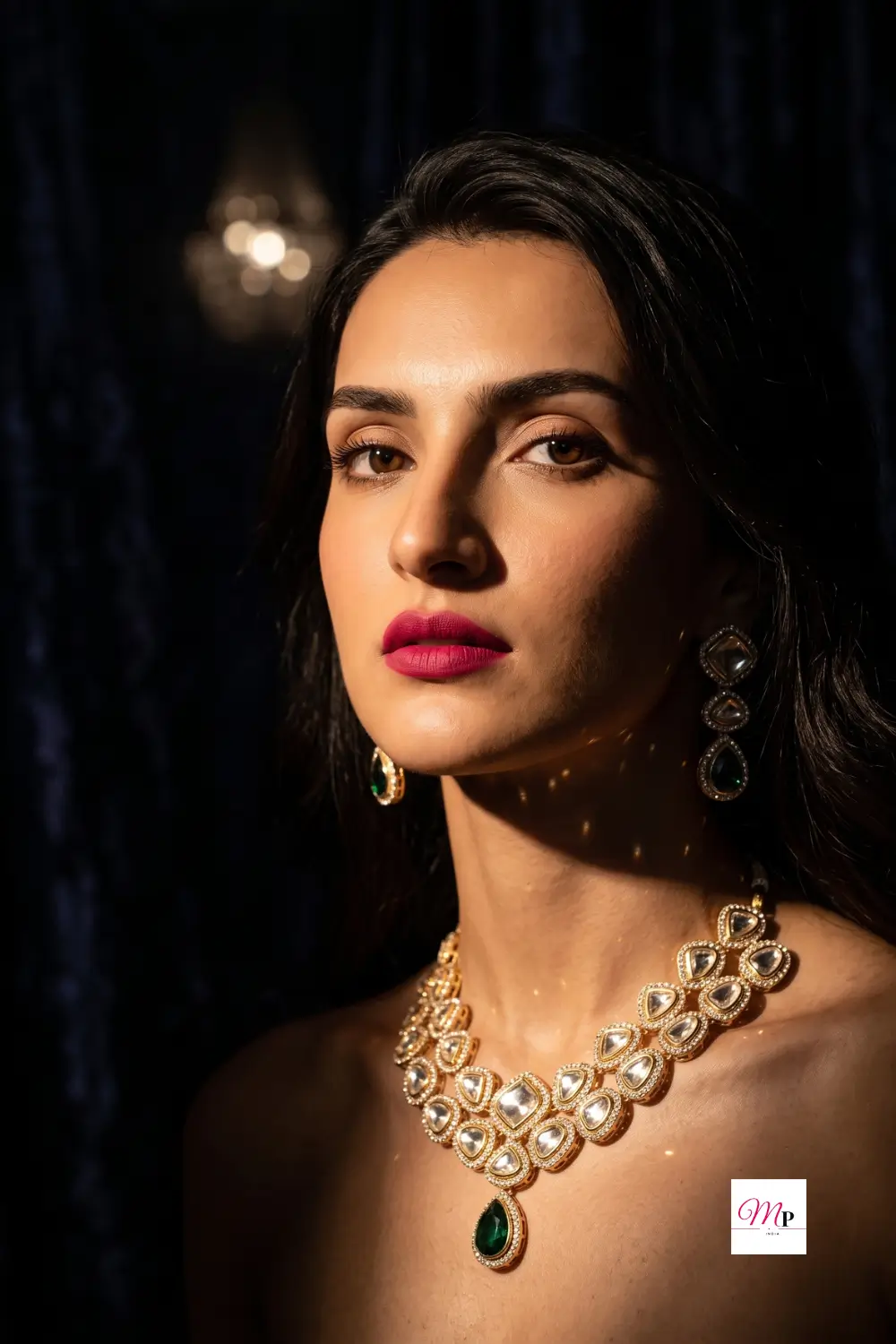
The Wedding Test
The honest verdict
You should buy this if: You need a complete festive set for under ₹700; you wear jewellery occasionally (2–3 times per month); you store pieces in anti-tarnish pouches; you prioritize photography over heirloom value; you want a lightweight set for long wedding events.
You should skip this if: You have metal allergies or sensitive skin (the alloy base is unspecified); you need daily-wear jewellery; you live in a coastal city with high humidity and no air conditioning; you expect the plating to last beyond six months of regular use; you prefer lobster clasps over drawstrings.
You already know whether a statement necklace belongs in your weekday rotation. This one does not pretend to.
Source: B — Aggregated buyer feedback: Multiple reviews from humid climates report tarnish beginning at 2–3 weeks; coastal buyers note faster degradation.
Here is the sentence that would cost a sale: The drawstring closure on this necklace is secure once tied, but it requires two hands and a mirror to adjust. If you are the kind of person who swaps jewellery between the cocktail hour and the dinner buffet, this will frustrate you. The alloy base will also begin to show its true colour within a month of humid exposure if you do not store it in an airtight pouch with an anti-tarnish strip.
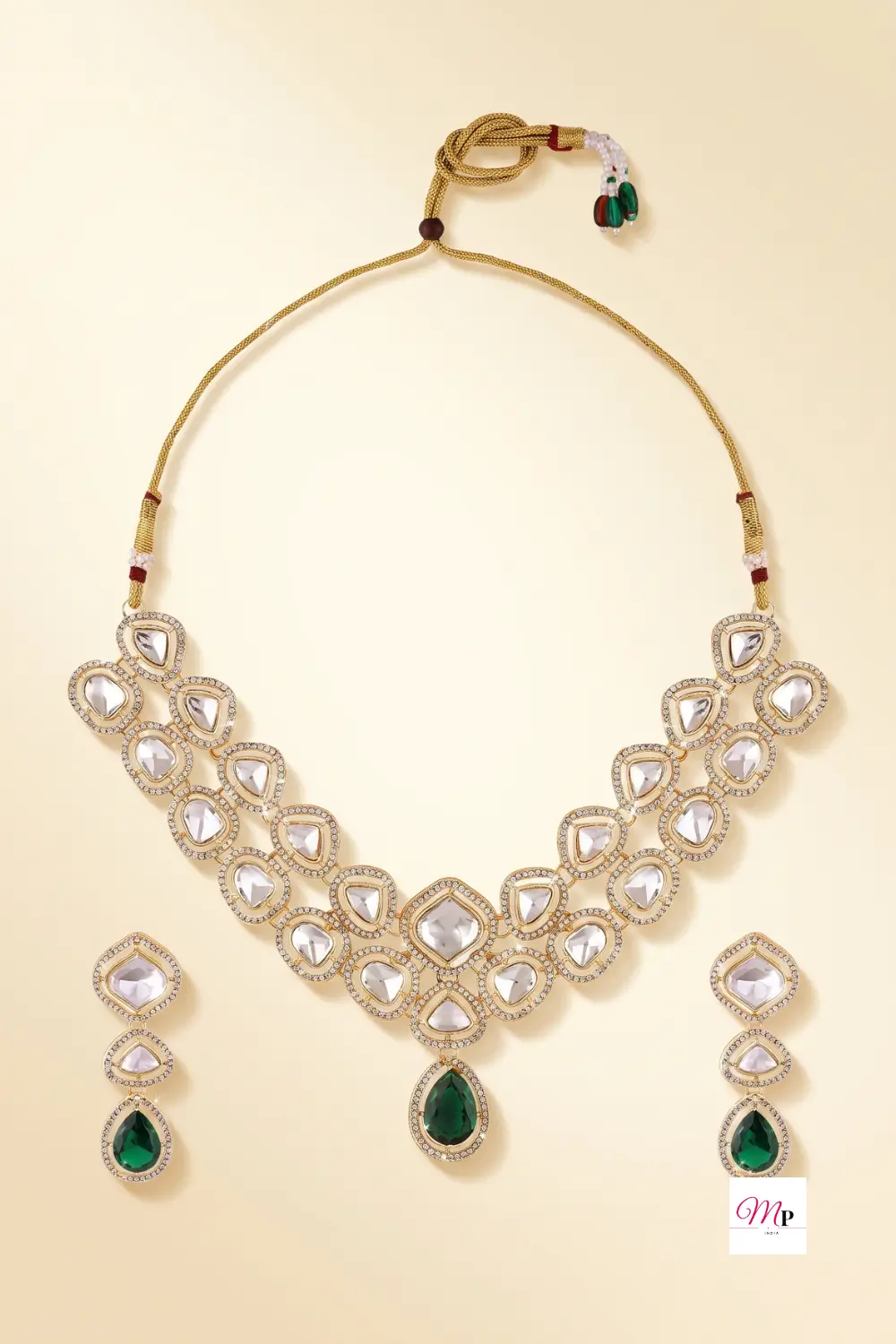
At ₹624, this set costs less than a single piece from Tanishq's Mia collection. The Sukkhi Austrian Diamond set on Flipkart is ₹899 for a similar four-piece configuration. The YouBella Gold Plated set on Amazon is ₹799 with a lobster clasp instead of a drawstring. The Shining Diva Fashion set is ₹699 but lacks the maangtikka. The value is not in the material — it is in the completeness of the set at a price that makes it disposable after one wedding season.
Complete the Look
What else completes your Patakha Vibes
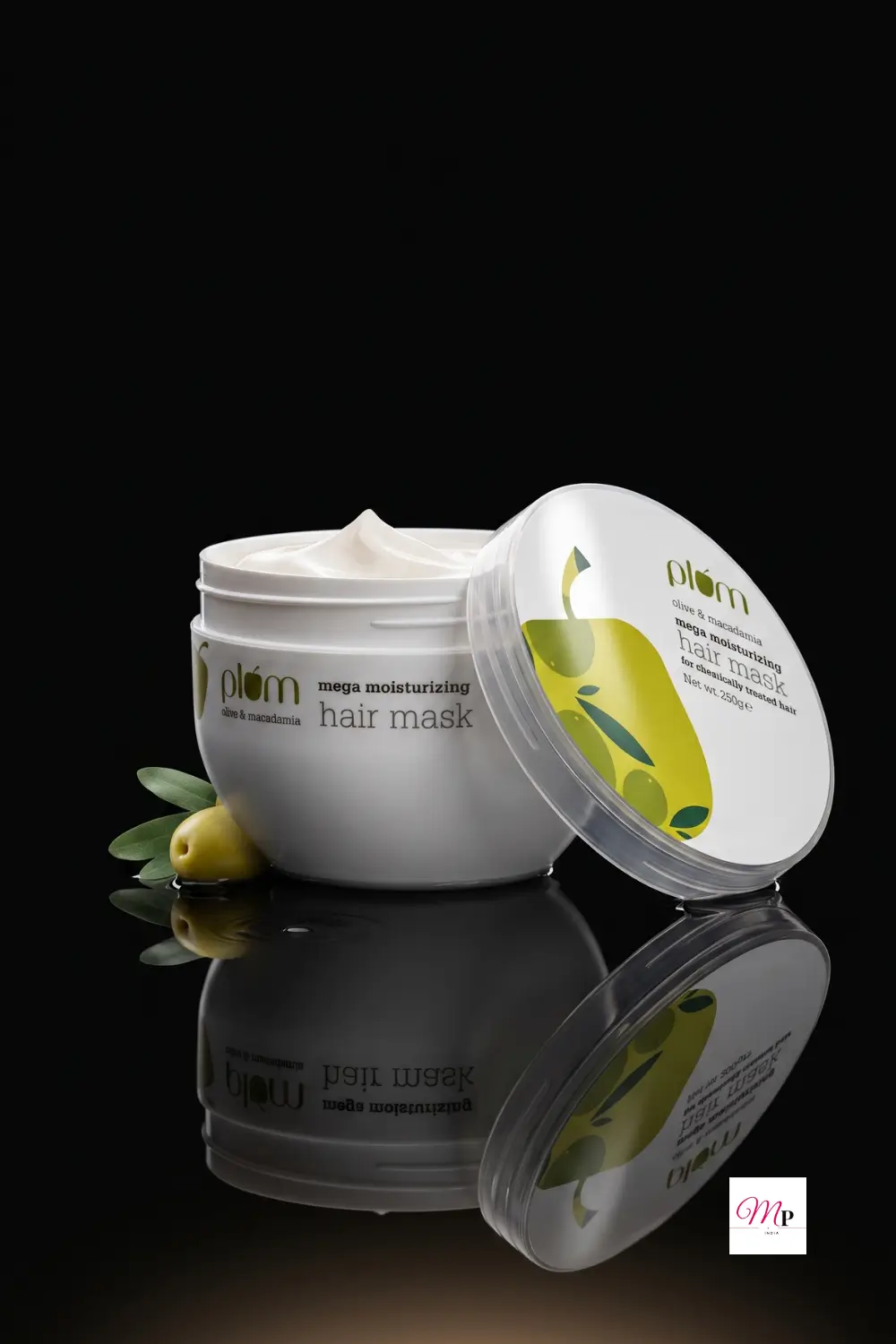
Plum Olive Macadamia Hair Mask
For hair that survives the humidity of a three-hour sangeet without frizz.
Read the Review →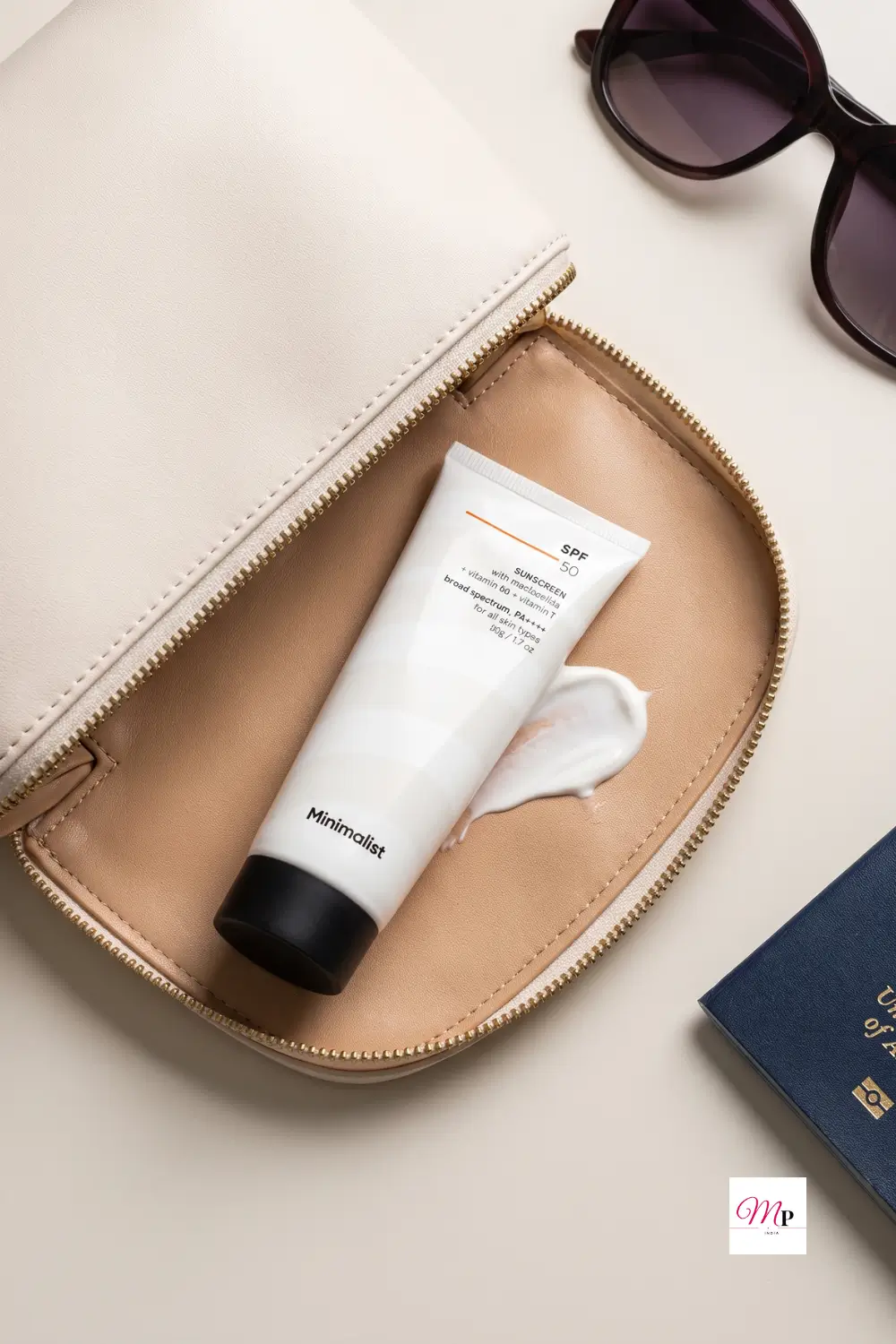
Minimalist SPF 50 Sunscreen
The base layer that keeps your makeup intact from baraat to bidai.
Read the Review →The Final Word
The price-per-wear reality
You do not buy this set for the metal. You buy it for the moment — the photograph, the compliment, the way it completes your outfit without completing your bank account. At ₹624 for four pieces, the price-per-wear is approximately ₹52 if you wear it to twelve events over one wedding season. That is less than the cost of a chai and samosa at a five-star hotel.
The honest observation is this: the alloy will tarnish, the drawstring will stiffen, and the stones may loosen if you treat this like heirloom jewellery. But if you treat it like what it is — a beautifully designed, lightweight, photography-ready festive set for the price of a dinner out — it delivers exactly what it promises. You already know whether you are buying for the gram or for the generations. This set is for the gram, and it knows it.
See this in our complete guide to Indian accessories and explore more jewellery sets for every budget.
Questions We Hear Most
Yes, for occasional festive wear at under ₹700. The quality is consistent with mass-market alloy jewellery — the design detail is impressive, but the plating lifespan is limited. Buyers consistently praise the lightweight comfort and the completeness of the four-piece set. The caveat is that the brand does not disclose the exact alloy composition, which matters if you have metal allergies.
Yes, especially in humid climates like Mumbai, Chennai, and Kolkata during monsoon. The alloy base reacts with moisture and salt in the air, causing the gold plating to shift toward a copper-brown tone at the edges. Visible reviews from coastal cities report this happening within two to three weeks. Storing in an airtight pouch with an anti-tarnish strip extends the lifespan significantly.
Wipe with a soft cloth after every use to remove skin oils and sweat. Store flat in an airtight box or pouch with an anti-tarnish strip — never leave it in the bathroom. Keep perfumes, hairsprays, and deodorants away from the jewellery; apply them before you put the set on. Do not soak in water or clean with harsh chemicals. A soft brush dipped in jewellery cleaning solution works for the stones, but avoid the plated metal.
Austrian Diamond is a marketing term for cubic zirconia (CZ), a lab-created crystal with a high refractive index. It is not a mined diamond. The stones are machine-cut to maximize light reflection, which is why they sparkle so intensely under artificial light and camera flashes. For wedding photography and indoor events, the visual difference between CZ and diamond is negligible to the naked eye. The trade-off is hardness: CZ is softer than diamond and can scratch or cloud over time with rough handling.
The listing does not specify hypoallergenic certification or nickel-free claims. Alloy composites in mass-market jewellery often contain nickel, which is a common allergen. If you have known metal allergies or sensitive skin, verify the composition with the seller before purchase and do a patch test on a small area before extended wear. For sensitive skin, sterling silver or gold-vermeil pieces are safer long-term investments.
Brief exposure to rain is unlikely to cause immediate damage, but prolonged moisture — especially in humid monsoon conditions — accelerates tarnish and can weaken the plating bond. If you get caught in the rain, wipe the jewellery dry immediately with a soft cloth and store it in an airtight pouch as soon as possible. Repeated wet-dry cycles are what degrade the plating fastest, not a single splash.


A Deliciously Full Moon in Taurus Is Auditing Your Cart — and Mercury Retrograde Brought the Receipts
The full moon was two nights ago but she hasn’t left — 97% lit, parked in Taurus, reading your bank statement over chai.
The Sharad Purnima Moon Hangs Full in Aries — and She Wants to Know Who’s Still Awake
The kheer soaked up last night’s moonlight, and Monday’s sky is still glowing. Full Moon in Aries, Venus and Mercury both backwards — here’s your honest read.
The Sharad Purnima Moon Rises Tonight With All Sixteen of Her Kalas — Here Is What She Asks of You
The moon rises at 5:08 PM IST tonight, nearly full and unbothered. Sharad Purnima light, Mercury freshly retrograde — all 12 signs.

Mercury Just Turned Backwards — and Your Saturday Holds a Secret Worth Keeping
Mercury stations retrograde in Scorpio today, the Moon swims through Pisces, and the Hunter’s Moon is two nights away. Here’s your honest Saturday sky.